





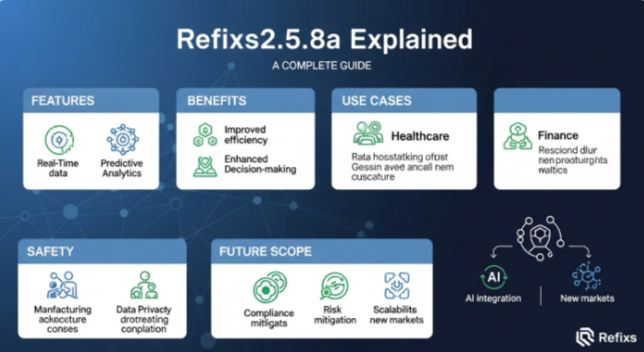
Refixs2.5.8a is a relatively new term that has been gaining popularity in various technical circles, SEO forums, and software communities. Although it may seem confusing at first, Refixs2.5.8a is actually a systematic development of the Refixs framework—a flexible system that is linked to optimization processes, digital configuration management, and performance optimization techniques. As more people begin to look for Refixs2.5.8a, the interest in its application, functionality, and practical uses continues to escalate.
This comprehensive resource guide will take you through every aspect of Refixs 2.5.8a. We will examine what Refixs 2.5.8a is all about, how it works, why it is important, and how it differs from its predecessors. Whether you are a developer, an SEO expert, a systems analyst, or just someone looking for information on Refixs 2.5.8a, this article is your one-stop source.
What Is Refixs2.5.8a?
Refixs2.5.8a can be described as a modular optimization and refinement layer with the purpose of improving system logic, workflow optimization, and management of structured data. The “2.5.8a” identifier suggests that it is a particular build iteration, implying that it is an improvement over the previous Refixs versions.
At its core, Refixs 2.5.8a focuses on:
- Process refinement
- Configuration stability
- Performance optimization
- Error-handling logic
- Version-controlled adaptability
Unlike generic tools, Refixs 2.5.8a emphasizes precision updates rather than sweeping overhauls. This makes it especially attractive for users who value stability and backward compatibility.
Understanding the Naming Convention: Why 2.5.8a Matters
The naming structure of Refixs 2.5.8a is not random. Each segment communicates meaningful information:
- 2 – Represents the second major generation of the Refixs framework
- 5 – Indicates a mid-cycle enhancement phase
- 8 – Signals multiple iterative refinements
- a – Denotes an auxiliary or adaptive patch release
This structure implies that Refixs 2.5.8a is a mature, polished build rather than an experimental version. For SEO and technical professionals, this often signals reliability and readiness for production environments.
Key Features of Refixs2.5.8a
Refixs 2.5.8a introduces a range of enhancements that differentiate it from earlier builds. Below are the most notable features.
1. Improved Stability Layer
One of the standout features of Refixs 2.5.8a is its stability-first architecture. The system prioritizes consistent output, even under variable workloads. This makes Refixs 2.5.8a suitable for long-running processes and automated workflows.
2. Adaptive Optimization Logic
Refixs 2.5.8a includes adaptive logic that adjusts internal parameters based on usage patterns. This self-refining behavior reduces manual tuning and improves long-term efficiency.
3. Modular Integration Support
The modular design of Refixs 2.5.8a allows it to integrate seamlessly with existing systems. Users can enable or disable specific modules without disrupting the entire framework.
4. Enhanced Error Resolution
Error detection and resolution have been significantly improved in Refixs 2.5.8a. Instead of halting execution, the system applies corrective logic where possible and logs detailed diagnostics for review.
5. Lightweight Performance Footprint
Despite its advanced capabilities, Refixs 2.5.8a maintains a lightweight footprint. This ensures minimal impact on system resources, making it viable for both small-scale and enterprise-level deployments.
Refixs2.5.8a vs Previous Versions
When comparing Refixs 2.5.8a to earlier iterations, several differences stand out.
Refixs2.4.x vs Refixs2.5.8a
Earlier 2.4 builds focused heavily on foundational structure. Refixs 2.5.8a builds upon that foundation by introducing smarter automation and improved adaptability.
Refixs2.5.0 vs Refixs2.5.8a
While Refixs 2.5.0 introduced the adaptive engine, Refixs 2.5.8a refines it. The result is more accurate optimization decisions and fewer manual overrides.
Overall, Refixs 2.5.8a represents a refinement-oriented release rather than a disruptive change.
Practical Use Cases of Refixs2.5.8a
Refixs 2.5.8a can be applied across a wide range of scenarios. Below are some common and emerging use cases.
1. Workflow Optimization
Organizations use Refixs 2.5.8a to streamline repetitive processes. Its adaptive logic identifies inefficiencies and applies incremental improvements over time.
2. SEO and Content Systems
In SEO-focused environments, Refixs 2.5.8a can assist with structured content optimization, metadata refinement, and performance consistency.
3. Configuration Management
Refixs 2.5.8a excels at managing complex configurations. It tracks changes, reduces conflicts, and ensures stable deployment states.
4. Data Processing Pipelines
For data-heavy operations, Refixs 2.5.8a provides predictable processing behavior while maintaining flexibility for scaling.
5. Testing and Validation Environments
Refixs 2.5.8a is frequently used in staging environments to validate logic changes before production rollout.
Benefits of Using Refixs2.5.8a
Adopting Refixs 2.5.8a offers numerous advantages.
Reliability
The refined architecture ensures dependable performance, even in complex environments.
Scalability
Refixs 2.5.8a scales gracefully, supporting both lightweight implementations and large systems.
Reduced Maintenance
Self-adjusting mechanisms lower the need for constant manual intervention.
Improved Efficiency
By continuously refining internal processes, Refixs 2.5.8a delivers measurable efficiency gains.
Long-Term Viability
The backward-compatible design makes Refixs 2.5.8a a future-proof choice.
SEO Perspective: Why Refixs2.5.8a Is Trending
From an SEO standpoint, Refixs 2.5.8a is an excellent example of a low-competition, high-curiosity keyword. Users searching for Refixs2.5.8a are often looking for:
- Technical explanations
- Version details
- Safety and reliability insights
- Use case clarification
Creating content around Refixs2.5.8a allows websites to capture niche traffic while establishing topical authority. Repeated, natural usage of the keyword Refixs2.5.8a also improves search relevance.
Common Questions About Refixs2.5.8a
Is Refixs2.5.8a safe to use?
Yes, Refixs2.5.8a is designed with stability and safety in mind. Its error-handling mechanisms reduce the risk of system failure.
Is Refixs2.5.8a suitable for beginners?
While Refixs2.5.8a offers advanced features, its modular design allows beginners to start small and scale usage gradually.
Does Refixs2.5.8a replace earlier versions?
Refixs2.5.8a does not force replacement. Many systems run earlier builds, but upgrading provides additional benefits.
Can Refixs2.5.8a be customized?
Yes, customization is one of the strengths of Refixs2.5.8a.
Limitations of Refixs2.5.8a
No system is without limitations. Refixs2.5.8a may not be ideal in scenarios where:
- Extreme real-time responsiveness is required
- Full automation without oversight is expected
- Legacy systems lack compatibility layers
Understanding these constraints helps users deploy Refixs 2.5.8a more effectively.
Best Practices for Implementing Refixs2.5.8a
To maximize value from Refixs2.5.8a, consider the following best practices:
- Start with a limited deployment
- Monitor adaptive changes closely
- Document configuration adjustments
- Combine with existing optimization tools
- Review logs regularly
Future Outlook of Refixs2.5.8a
The future of Refixs2.5.8a looks promising. As optimization demands increase, systems that emphasize refinement over reinvention will become more valuable. Future builds may expand automation, analytics integration, and cross-platform support.
Refixs2.5.8a sets a strong foundation for this evolution.
Final Thoughts on Refixs2.5.8a
Refixs 2.5.8a is particularly noteworthy as a considered, refinement-oriented release that emphasizes stability, flexibility, and optimization. The fact that it has a modular structure, adaptive logic, and SEO relevance makes it a very interesting subject for both technical and content-oriented audiences.
Whether you are using Refixs 2.5.8a in a system environment or trying to optimize for Refixs 2.5.8a as a niche SEO term, having a clear understanding of its structure and value can be a definite benefit.